The words describe the serve, not the measure
State the whisky, the measure and your preference separately.
| Request | What it communicates | What still needs confirming |
|---|---|---|
| Neat | Whisky by itself, without additions | The brand/expression and the ml measure |
| On the rocks | Whisky served with ice | The measured whisky quantity; ice is not extra whisky |
| Water on the side | Water supplied separately so you control additions | Whether you also want ice |
| Ice on the side | Ice kept separate initially | That the whisky itself should arrive without ice |
| With soda | A mixer is part of the order | Mixer quantity and any separate menu charge |
Jameson’s neat-service explanation and The Glenlivet’s on-the-rocks guide support the core definitions.
What neat means in practice
When you ask for a neat serve, the simplest instruction is “no ice and no mixer”. Jameson describes neat whiskey as whiskey alone in a glass. A glass of drinking water beside it does not change the whisky until water is actually added.
Neat is not a quality grade. A single malt, a blend and other whisky categories can all be ordered this way. The term also does not promise a larger pour, a particular glass or a certain age statement. If you are choosing between categories rather than serving styles, use our single malt versus blended whisky guide.
Avoid relying on “normal” or “regular” when the detail matters. Those words may mean the house’s usual measure or usual ice treatment. Saying the exact amount and additions takes only a few extra words and helps staff give you what you intended.
What ice changes
Ice cools the drink and becomes water as it melts. The Glenlivet describes both the cooling and dilution effects in its serving guide. The result changes as the glass sits, so the first sip and a later sip need not have the same temperature or concentration.
There is no universal right answer between neat and ice. The Scotch Whisky Association explicitly treats serving preference as personal. Choosing ice is not a claim that the whisky is inferior, and choosing neat does not establish expertise.
If you are uncertain about the amount of ice, ask for it separately. This is a practical way to control the initial serve without asking the bar to replace a drink that already contains melting ice. Do not assume every venue carries large cubes, spheres or specialist glassware; ask about what is actually available.
Ordering examples that remove ambiguity
These are wording examples for an adult who has chosen to order, not recommended drinking quantities.
| What you want | A clear request | Why it helps |
|---|---|---|
| A small measured pour, no additions | “30 ml of this whisky, neat, please.” | States amount and preparation |
| The same measured pour with ice | “30 ml of this whisky over ice, please.” | Keeps the measure independent of ice |
| Control over additions | “30 ml neat, with water and ice separately.” | Makes your preference explicit |
| Information before deciding | “Which expression is this, what is its ABV, and what measure is priced?” | Checks the item rather than the umbrella brand |
Read the menu’s available measures; do not infer them from the size of the glass.
Added water changes concentration, not the original alcohol amount
Consider a calculation, not a suggested serve: 30 ml of whisky at 40% ABV contains 12 ml of alcohol. Adding 10 ml of water increases the approximate liquid volume to 40 ml while the original 12 ml of alcohol remains. Using simple volume addition, that is approximately 30% ABV after mixing.
The exact final mixture volume can differ slightly from simple addition, so this is an illustration rather than a laboratory measurement. With ice, the amount that has melted is usually unknown. A precise final ABV cannot be read from the number of cubes alone.
This explains a common misunderstanding: a weaker concentration does not mean the alcohol originally poured has disappeared. For a separate explanation of measured pours, see 30 ml and 60 ml peg sizes. Do not use dilution calculations as a safe-driving or safe-intake rule.
When a familiar phrase is still ambiguous
People sometimes use straight, straight up and neat loosely in conversation. If your preference matters, describe it in ordinary words: “without ice”, “with ice”, or “chilled but without ice in the final glass”. That is more reliable than assuming the server and guest attach exactly the same meaning to every term.
Check the bill against the whisky expression and measure you agreed. A drink can look larger after water or a mixer is added while containing the same original pour. Conversely, neat does not mean the glass should be filled to the rim.
Planning your visit
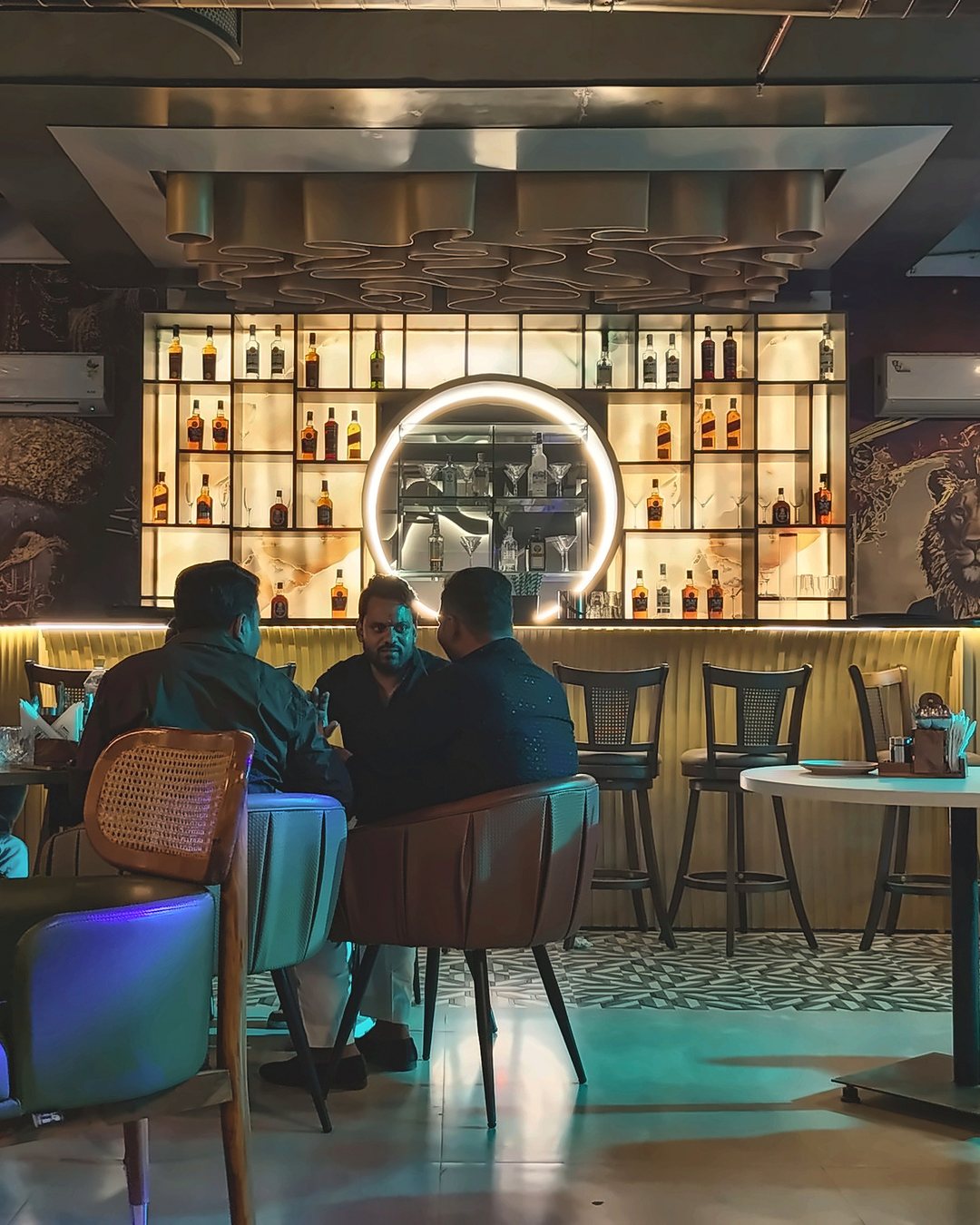
Cheers & Beers is on MG Road 2 in Jaipur House, Agra. View the food and alcohol-free refreshment menu and check entry and location details. See our drinks menu for the listed selection and ask the team about availability. Product names used as sources in this article do not promise those bottles are in stock.
Adults 21+ only at Cheers & Beers. Drink responsibly. Never drink and drive.